Don't miss our Diwali Offer - up to 50% OFF!

Eco-Friendly & Energy Saving Air Coolers: A Smart Cooling Choice
Eco-friendly air coolers offer a smarter, more sustainable alternative.


As temperatures continue to rise, the demand for cooling solutions increases. However, traditional air conditioners consume high amounts of electricity and use refrigerant gases that impact the environment. Eco-friendly air coolers offer a smarter, more sustainable alternative. They provide effective cooling while using significantly less electricity, making them ideal for homes, shops, and small businesses.
Why Air Coolers Are Environment-Friendly
Air coolers operate on the natural principle of water evaporation. Instead of using compressors and chemical refrigerants like air conditioners, they draw warm air through water-soaked cooling pads and release fresh, cool air into the room.
Key Environmental Benefits
- Low Electricity Consumption — Uses 70–80% less power than air conditioners
- No Harmful Gases — Does not use CFCs or refrigerants
- Fresh Air Circulation — Continuously circulates outside air
- Lower Carbon Footprint — Reduced energy demand means less environmental impact
- Affordable Operation Cost — Saves money every month
How Much Electricity Do Air Coolers Use?
Most domestic air coolers consume between 100 to 250 watts, compared to air conditioners that can consume 1,500 to 2,000 watts or more. This means you can run an air cooler for many hours at a fraction of the electricity cost.
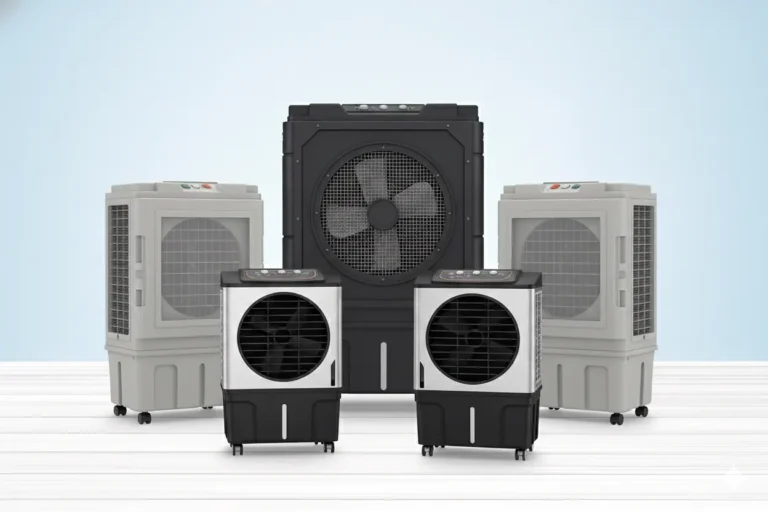
Types of Energy-Efficient Air Coolers
- Personal Air Coolers
- Ideal for bedrooms and small offices
- Compact and portable
- Very low power consumption
- Desert Air Coolers
- Suitable for large rooms and halls
- Powerful airflow
- Energy-efficient motor design
- Tower Air Coolers
- Modern and space-saving
- Balanced cooling with low electricity usage
Tips to Maximize Efficiency and make your air cooler even more Eco-friendly:
- Place it near a window or open area for cross ventilation
- Clean cooling pads regularly
- Use appropriate fan speed settings
- Keep water tank clean
- Switch off when not required
Proper maintenance ensures better cooling and less energy waste.
Why Choose Air Coolers Over AC?
- Electricity Consumption
- Air Cooler: Consumes very low power (approx. 100–250 watts).
- Air Conditioner: Consumes high power (approx. 1,500–2,000+ watts).
- Environmental Impact
- Air Cooler: Eco-friendly; works on natural water evaporation and does not use harmful refrigerant gases.
- Air Conditioner: Uses refrigerants and compressors that increase carbon footprint.
- Installation Cost
- Air Cooler: No complex installation required; ready to use and portable.
- Air Conditioner: Requires professional installation, outdoor unit setup, and additional wiring.
- Maintenance
- Air Cooler: Simple cleaning of pads and water tank; low maintenance cost.
- Air Conditioner: Regular servicing, gas refilling, and higher maintenance expenses.
- Air Quality
- Air Cooler: Circulates fresh air from outside and adds moisture, making it comfortable in dry climates.
- Air Conditioner: Recirculates indoor air and may cause dryness.
- Operating Cost
- Air Cooler: Very low monthly electricity bill.
- Air Conditioner: High electricity bills, especially during summer.
- Best Suitable Climate
- Air Cooler: Ideal for dry and semi-dry climates.
- Air Conditioner: Works in all climates but at higher energy cost.
Air coolers provide natural, cost-effective, and environmentally friendly cooling, making them a smart choice for homes and small businesses.
If you’re looking for energy-efficient and eco-friendly air coolers for your home or shop, you can explore more details on:
https://kingtailors.co.in/product-category/air-coolers
Conclusion
Eco-friendly air coolers are a practical solution for sustainable living. They consume less electricity, reduce monthly bills, and minimize environmental harm. Whether for homes or small businesses, choosing an energy-efficient air cooler is a responsible step toward a greener future.
Simple choices today can create a cooler and cleaner tomorrow.